TL;DR
- Standard semaglutide titration starts at 0.25 mg once weekly and steps up every four weeks, landing most patients on a maintenance dose of 1.7 mg or 2.4 mg by roughly week 17.
- Diabetes and weight-loss protocols use the same molecule with different ceilings. Ozempic typically tops out near 2 mg weekly, while Wegovy is FDA-approved for weight management up to 2.4 mg in adults with a BMI of 30+, or 27+ with a weight-related condition.
- Most people lose up to 15% of their body weight over about 16 months, at a pace of roughly 1 to 2 pounds per week.
- Compounded semaglutide is drawn in units, not milligrams. On a 2.5 mg/mL vial, a 0.25 mg dose is 10 units on a U-100 insulin syringe. Confirm your concentration before the first injection.
- A long gap in treatment resets your tolerance. After about four weeks off, most providers restart you two steps down the ladder instead of at your last active dose.
James is 41, runs a product team, and hasn’t felt like himself in about three years. He’s up 28 pounds since his last promotion, his energy flatlines by 2 p.m., and he’s cycled through intermittent fasting, a $200-a-month meal kit, and a gym membership he uses twice a month. A GLP-1 prescription is what finally changed the trajectory. But starting the medication wasn’t the confusing part. The confusing part was the dosage chart his provider handed him and why the number on it kept changing every four weeks.
Thank you for reading this post, don't forget to subscribe!
If you’re looking at a semaglutide dosage chart wondering why week 5 doesn’t match week 1, or whether the units in your compounded prescription line up with a standard Wegovy pen, here’s the breakdown.
Table of Contents
- What does a standard semaglutide dosage chart look like?
- How does dosing differ between diabetes management and weight loss?
- What monitoring and lab work should you expect during treatment?
- How do you manage side effects during dose escalation?
- What is the dosage protocol when you pause or stop semaglutide?
- How do compounded semaglutide units convert to a standard mg chart?
- What should you ask before starting a semaglutide protocol?
- Frequently asked questions
What does a standard semaglutide dosage chart look like?
It starts at 0.25 mg once weekly for four weeks, then increases roughly every four weeks until you hit a maintenance dose. For weight management that’s usually 1.7 mg or 2.4 mg. For type 2 diabetes on Ozempic, it’s usually 1 mg or 2 mg. That first month isn’t meant to produce weight loss at all. It exists so your gut can adapt to slowed gastric emptying before the dose gets strong enough to make you miserable.
Here’s the escalation most prescribers follow:
| Week | Dose | What’s happening |
|---|---|---|
| 1–4 | 0.25 mg | Tolerance-building only; expect little to no weight change |
| 5–8 | 0.5 mg | First dose with real therapeutic effect |
| 9–12 | 1.0 mg | Appetite suppression becomes obvious to most patients |
| 13–16 | 1.7 mg | Pre-maintenance step on Wegovy protocols |
| 17+ | 2.4 mg | Weight-management maintenance dose |
The tcurgentcare dosing instructions and Sanctuary Wellness Institute’s dosage chart both follow this same four-week-interval structure, which has become the default across telehealth and in-person practices alike.
Treat it as a template, not a script. Plenty of our patients sit at 1 mg for three months because that’s where appetite control and side effects balance out, and there’s no clinical reason to push them higher. Others tolerate every step cleanly and reach 2.4 mg right on schedule.

Pro tip: Don’t judge the medication by week 2. If you’re expecting appetite suppression at 0.25 mg and nothing’s happening, that’s the protocol working as designed, not evidence the drug won’t work for you.
How does dosing differ between diabetes management and weight loss?
Same molecule, different finish line. On Ozempic, the dose climbs only until fasting glucose and A1C land in range. Once a patient’s A1C is where it needs to be at 1 mg, pushing to 2 mg often adds side effects without adding much benefit. Wegovy keeps climbing to 2.4 mg because higher exposure correlates with more appetite suppression, and appetite suppression is the whole mechanism of the weight-loss protocol.
A few practical differences that trip people up:
- The pen hardware isn’t interchangeable. Wegovy ships as single-dose pens in each strength, including 1.7 mg. That 1.7 mg rung doesn’t exist on the Ozempic ladder, so a patient moving between products won’t always find a one-to-one match.
- Other diabetes medications change the math. If you’re on insulin or a sulfonylurea, your prescriber should be reducing those doses as semaglutide takes effect. Semaglutide alone rarely causes hypoglycemia. Semaglutide stacked on unadjusted insulin absolutely can.
- The trigger for a dose increase differs. Diabetes dosing follows labs. Weight-loss dosing follows the scale, the waistline, and how your stomach is handling the current step.
| Factor | Diabetes protocol (Ozempic) | Weight loss protocol (Wegovy/compounded) |
|---|---|---|
| Typical max dose | 2.0 mg weekly | 2.4 mg weekly |
| Primary goal | A1C and fasting glucose control | Appetite suppression and caloric deficit |
| Dose adjustment trigger | Lab-confirmed glucose trends | Weight trend, tolerability, plateau |
| Escalation pace | Often slower, glucose-driven | Standard 4-week steps unless side effects intervene |
| Stopping point | Whenever glucose targets are met | Highest tolerated dose, up to label max |
If you’re prescribed a diabetes-labeled product off-label for weight loss, or a compounded vial, your provider is borrowing the Wegovy escalation logic regardless of what the label says. Ask them which ceiling they’re aiming for and why. If they can’t answer, that tells you something.
To understand what’s happening to your metabolic numbers as the weight comes off, our piece on how weight loss reverses metabolic syndrome walks through what shows up in your bloodwork.
What monitoring and lab work should you expect during treatment?
Baseline labs before your first injection, a check-in at every dose increase, and repeat labs around every three months. The check-ins matter more than most patients expect, because that’s where a side effect gets caught while it’s still a nuisance instead of a reason to quit.
- Baseline visit: comprehensive metabolic panel, A1C or fasting glucose, lipid panel, often thyroid function, plus weight, waist circumference, and a real conversation about GI history and current medications.
- Weeks 4, 8, 12, 16: a short video check-in at each dose increase to review nausea, bowel habits, and weight trend before approving the next step.
- Month 3: repeat labs covering glucose, lipids, and kidney function, which matters more if you’re also treating insulin resistance.
- Every 3 to 6 months after: ongoing labs and a dose reassessment. Maintenance is not set-and-forget.
Here’s the arithmetic worth running before you start, so your expectations match the math. Say you weigh 230 pounds and you’re targeting that 15% figure. That’s 34.5 pounds. Sixteen months is about 69 weeks. So 34.5 ÷ 69 works out to an average of half a pound per week, even though the healthy weekly target is 1 to 2 pounds. The gap is the point: the first month on 0.25 mg produces almost nothing, and every patient hits stalls lasting two or three weeks. A weekly rate of 1 to 2 pounds during active loss averages out to far less across the whole run. If you’re calculating a finish date off 1.5 pounds a week with no interruptions, you’ve built yourself a disappointment. Use roughly half that for planning.
If insulin resistance is in the picture, lab timing and dose timing usually get adjusted together, which we cover in losing weight with insulin resistance without crash diets. If metformin is part of your protocol, what the scale really shows with metformin will keep you from misreading a normal plateau as failure.
Pro tip: Ask your provider for your weight-loss velocity in pounds per week, not just total pounds lost. Sustained losses well above 2 pounds a week usually mean you’re giving up muscle along with fat, and that’s a dose conversation.
How do you manage side effects during dose escalation?
Side effects cluster in the first few days after a dose increase, not randomly mid-cycle. The fix is behavioral before it’s pharmacological: eat slower, cut fat and fried food for a few days, and drink more water than feels necessary. Nausea, constipation, and reflux account for most complaints we hear.
- Eat smaller, protein-forward meals. A large or greasy meal sits in a stomach that’s already emptying slowly. That’s the drug’s mechanism, not bad luck.
- Hydrate on a schedule, not on thirst. Reduced gut motility causes most of the constipation, and water plus fiber resolves the majority of it without another prescription.
- Hold the dose when a side effect is severe. Staying at your current step an extra two to four weeks is a legitimate clinical decision. The chart is a guideline, not a deadline.
- Skip alcohol around dose-increase days. It stacks nausea and dehydration right when your body is adjusting.
- Log symptoms against your injection day. If nausea reliably lands on day two, your provider can shift your injection to a Friday so the worst of it hits a weekend.
For the fuller picture on food timing, alcohol, and supplement interactions, our GLP-1 dos and don’ts guide goes deeper than any dosage chart will.
What is the dosage protocol when you pause or stop semaglutide?
There’s no universal off-ramp, but almost no physician will put you back on your last active dose after a gap longer than about four weeks. You restart lower, often two steps down, and re-escalate. Tolerance fades during time off, and going straight back to 2.4 mg after a six-week insurance lapse is a reliable way to spend a night in urgent care.
Two scenarios that look similar and aren’t:
- You miss one week on vacation. Take your next dose on your normal day and continue at the same strength. One skipped injection doesn’t reset anything meaningful.
- Your pharmacy backorders you for eight weeks at 2.4 mg. Expect to restart around 1 mg and climb back over roughly two months. Frustrating, but it beats re-living week 5 nausea at the top dose.
Some weight regain after stopping is normal. The appetite suppression goes away as the drug clears, which takes several weeks, and the hunger signals it was quieting come back. The patients who hold their results are the ones who taper deliberately or stay on a maintenance dose with ongoing coaching. The ones who stop cold the week they hit goal weight almost always come back to us six months later heavier than when they quit. That’s the single most common mistake we see, and it’s entirely avoidable if you plan the exit before you plan the ramp.
If you’re weighing an oral option for maintenance, read whether semaglutide pills actually work for weight loss before you commit.
How do compounded semaglutide units convert to a standard mg chart?
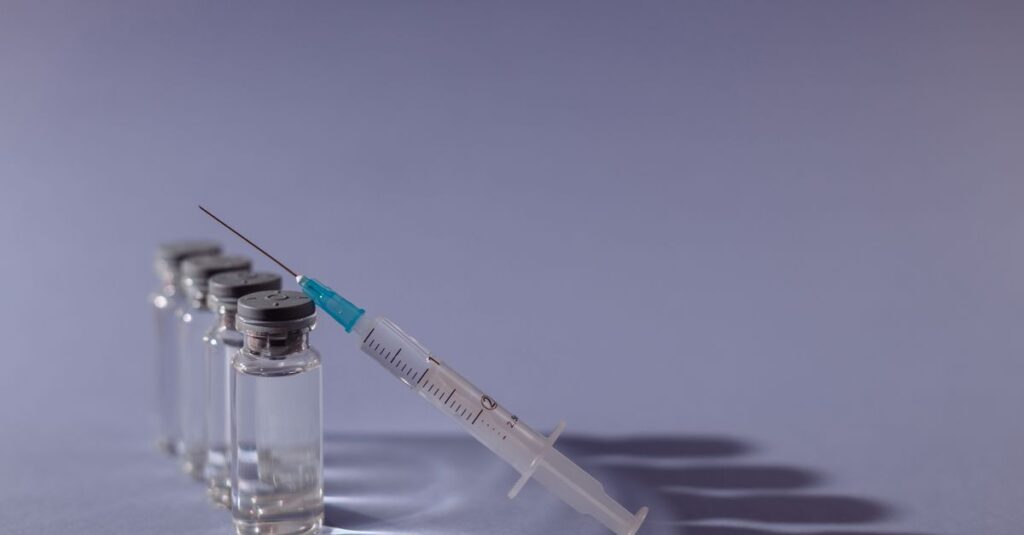
Compounded semaglutide is drawn in units on an insulin syringe rather than dialed in milligrams on a pen, so you need the vial’s concentration to convert correctly. Getting this wrong is the most common dosing error we see with compounded prescriptions. Many pharmacies, including the protocol in Empower’s semaglutide dosing chart, use 2.5 mg/mL as a standard, though 5 mg/mL and other concentrations exist.
Here’s the math so you can run it on your own vial.
The formula: Units = (prescribed dose in mg ÷ concentration in mg/mL) × 100
Example: You’re prescribed 0.25 mg weekly and your vial reads 2.5 mg/mL.
- 0.25 mg ÷ 2.5 mg/mL = 0.1 mL
- 0.1 mL × 100 units/mL = 10 units
Draw to the 10-unit line on a U-100 syringe. Step up to 0.5 mg on that same vial and it’s 0.5 ÷ 2.5 × 100 = 20 units. At 1 mg you’re at 40 units. The concentration stays fixed, so units scale directly with your prescribed dose.
The rule of thumb: confirm the concentration printed on the vial before the first injection, every single time you get a new vial. On a 5 mg/mL vial, that same 0.25 mg dose is 5 units, not 10. Run the wrong concentration through the formula and you’ve doubled or halved yourself without knowing it. Some compounded formulations also include cyanocobalamin (B12), which doesn’t change the semaglutide arithmetic but does mean your syringe is holding a combined solution.
For how compounded pricing compares to brand-name pens, what compounded semaglutide actually costs you covers where the savings come from and what you give up.
Pro tip: Photograph your vial label and your filled syringe before your first injection and send both to your prescribing physician. Two minutes of confirmation prevents a month of silent dosing errors.
What should you ask before starting a semaglutide protocol?
Ask about concentration, escalation flexibility, and monitoring cadence. A provider who can’t answer these clearly in the first visit is telling you what kind of practice they run.
- “What’s my starting dose and escalation timeline?” Confirms nobody’s rushing you to a high dose to show fast results.
- “Is this brand-name or compounded, and what concentration?” This determines your unit math and what you’re actually paying for.
- “How often will I have labs and physician check-ins?” Real monitoring means a check-in at every dose increase, not a refill button.
- “What’s the plan if I plateau or the nausea is bad?” The answer should involve holding or adjusting your dose, not “push through it.”
- “What happens if I need to pause?” A provider with no restart protocol hasn’t thought past the first prescription.
Still comparing providers? Our guide on how to choose a legit telehealth longevity clinic lists the credentials and the red flags worth checking before you hand over a card number. And if fatigue is a bigger part of your complaint than weight, rule out adrenal and cortisol issues first. Low cortisol symptoms and what actually helps is the better starting point in that case.
James, three months in, sits at 0.5 mg, down 11 pounds, and past the nausea that flattened him in week 6. His dose didn’t move because a calendar said so. It moved when his labs and his symptom check-ins said he was ready. That’s the difference between following a dosage chart and being managed on one.
Frequently asked questions
Can I switch from Ozempic to Wegovy without restarting the dosage chart?
Usually yes if you’re already at a comparable dose, since both contain semaglutide. Have your physician confirm the exact milligram equivalence first, because the pen devices deliver different dose increments and the strengths don’t map one-to-one at every step.
Is compounded semaglutide the same medication as Ozempic or Wegovy?
The active molecule is the same. The difference is who made it: a licensed compounding pharmacy rather than the original manufacturer. Concentration, inactive ingredients like added B12, and packaging all vary, which is why your unit math has to come from your specific vial.
How long after a dose increase should I expect stronger appetite suppression?
Most patients notice the shift within the first week or so, since semaglutide accumulates gradually rather than peaking immediately. If you’ve spent two full weeks at a new dose and feel no difference at all, bring it up at your next check-in rather than assuming you need to jump another step.
Ready for a dosage chart built around your labs instead of a template? Book a same-day consult with YOURx Health and talk to a board-certified physician before your first injection, not after.