TL;DR
- In our clinic we aim for 5–7% of starting body weight, not a BMI chart number. For a 210-lb patient that’s 10.5 to 14.7 pounds, and it’s usually enough to move fasting glucose and A1C.
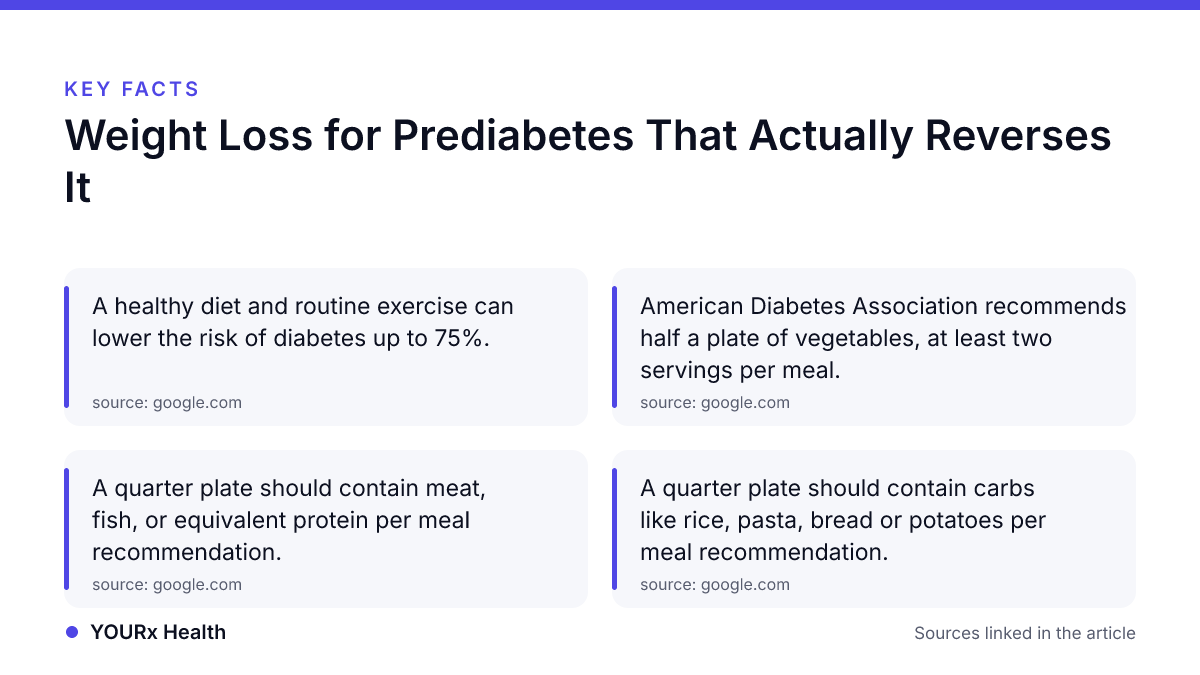
- Diet structure beats willpower. Half your plate vegetables, a quarter protein, a quarter carbs, eaten as three meals spaced under six hours apart, is the ADA-backed framework.
- Prediabetes is not a life sentence. Diet plus routine exercise can lower diabetes risk by up to 75%.
- Metformin and GLP-1s are accelerators, not substitutes. They help most when the plate is already fixed and the numbers still won’t move.
- Eggs and full-fat dairy aren’t the problem. Refined carbs, sugary drinks, and liquid calories are what push glucose in the wrong direction.
Prediabetes doesn’t require dramatic weight loss to reverse. Most of the patients we see are bracing for a 60-pound journey, and the number that actually matters is closer to 12.
Thank you for reading this post, don't forget to subscribe!

Table of Contents
- How much weight do I need to lose to reverse prediabetes?
- What foods should I eat to help reverse prediabetes?
- Is prediabetes too late to reverse?
- Can metformin be used to treat prediabetes?
- Does a GLP-1 medication work better than diet alone for prediabetes?
- How do I build a weight loss plan for prediabetes that actually sticks?
- Frequently asked questions
How much weight do I need to lose to reverse prediabetes?
For most people, somewhere between 5% and 7% of current body weight. That’s the target we set with patients before we talk about anything else, and it’s the single most common thing people get wrong. They assume their labs won’t budge until they’ve lost 50 or 80 pounds, so they never start.
Run the math on your own number. Multiply your current weight by 0.05, then by 0.07. That’s your range.
Say you weigh 210 pounds:
- 210 × 0.05 = 10.5 lbs
- 210 × 0.07 = 14.7 lbs
So your target zone is roughly 10 to 15 pounds. At a steady, sustainable pace of about a pound a week, hitting the top of that range takes around 15 weeks, call it three and a half months. That’s an illustrative pace, not a promise, but it’s the arithmetic worth internalizing: this is a one-season project, not a two-year one.
Pro tip: Track percentage, not pounds. A 300-lb man who loses 15 pounds has hit 5%. A 150-lb woman hits the same threshold at 7.5 pounds. Insulin sensitivity tracks with the percentage, which is why two people losing wildly different amounts can see nearly identical lab improvements.
This is also where medication shortens the runway. People managing insulin resistance without crash dieting often stall out on diet changes alone because their baseline insulin sensitivity is already compromised. A GLP-1 protocol or metformin can close that gap faster than diet working by itself.
What foods should I eat to help reverse prediabetes?
Think in proportions, not superfoods. Half the plate non-starchy vegetables, a quarter lean protein, a quarter complex carbs. That’s the plate method the American Diabetes Association recommends, and it survives contact with Thai food, taco night, and your mother-in-law’s cooking.
| Plate section | What goes there | Why it matters |
|---|---|---|
| Half the plate | Non-starchy vegetables: broccoli, spinach, peppers, salad greens | Fiber slows glucose absorption and fills you up at low calorie cost |
| One quarter | Protein: chicken, fish, eggs, tofu | Blunts the post-meal glucose spike and protects muscle while you lose fat |
| One quarter | Carbs: rice, pasta, bread, potatoes | Carbs stay on the plate. Portion size and what you eat them with decide the glucose response |
Timing carries almost as much weight as composition. Three meals a day, each less than six hours apart, holds glucose steadier than grazing from 10am to midnight or skipping lunch and demolishing dinner, per Mayo Clinic’s dietary guidance for prediabetes. Every meal needs protein, fat, and carbohydrate together. A bowl of plain pasta behaves very differently in your bloodstream than the same pasta with grilled chicken and olive oil on it.
The practical version, for people who eat out: order the protein and the vegetable side first, then decide how much of the starch you actually want. Restaurant plates are roughly 80% carbohydrate by surface area, so the plate method fails by default unless you intervene at the ordering stage. The other fix we recommend constantly is eating the vegetables and protein before the rice or bread at the same meal. Same food, same calories, gentler glucose curve.
Are eggs good for prediabetes? Yes. High protein, almost no carbohydrate, no meaningful glucose response. The old worry about dietary cholesterol driving blood cholesterol has been walked back in current nutrition guidance. The foods doing real damage are refined carbs, sugary drinks, and anything you drink your calories from, including the oat milk latte with three pumps of vanilla.
Is prediabetes too late to reverse?
No. Prediabetes means your blood sugar is elevated but hasn’t crossed into type 2 territory, which is exactly the window where intervention pays the most. The confusion comes from people hearing “pre” and assuming it means “early stage diabetes with the damage already locked in.”
A healthy diet paired with routine exercise can lower the risk of developing diabetes by up to 75%, according to research cited in prediabetes dietary guidance. Very little in preventive medicine produces a number like that.
In our experience, patients making real changes start seeing fasting glucose and A1C move within three to six months. The ones who stay stuck almost always made partial changes: they swapped soda for orange juice, or they added the gym and never touched their plate. Half measures produce half results, and in prediabetes that usually looks like no result at all.
Can metformin be used to treat prediabetes?
Yes. Metformin is commonly prescribed off-label for prediabetes, especially for people with a strong family history of type 2 diabetes, PCOS, or a higher-risk BMI. It works by reducing how much glucose your liver dumps into your bloodstream and by improving how your cells respond to insulin. It does not suppress appetite the way GLP-1 medications do, though some patients see modest weight loss anyway.
The myth is that metformin is a weight loss drug that happens to help glucose. It’s the reverse. The weight loss is a side effect, typically a few pounds over several months, not the double-digit drops people see on GLP-1 protocols. If you want realistic expectations, we break down the actual numbers patients see instead of the internet version.
Pro tip: Start metformin at the lowest dose with food, at dinner, and hold it there for a week or two before titrating up. The GI side effects that make people quit in the first month are mostly a dosing-speed problem, not a drug problem. Extended-release formulations help too, and that’s a conversation worth having with your prescriber before you give up on it.
Does a GLP-1 medication work better than diet alone for prediabetes?
For people who’ve genuinely rebuilt their plate and still see minimal movement after a few honest months, yes. GLP-1 medications like semaglutide tend to outperform diet-only approaches because they act on appetite and insulin signaling in a way food choices can’t replicate. They were never designed to replace the plate method. They make it possible to stick to.
Calling GLP-1s “cheating” misreads what they do. They slow gastric emptying and raise satiety signaling, which means the calorie deficit weight loss requires stops feeling like a daily fight with your own brain. Paired with the plate method, patients on GLP-1 protocols reach that 5–7% threshold faster and plateau less. Our guide on GLP-1 dos and don’ts covers the practical side, including how to keep protein high enough to avoid losing muscle along with the fat.
One more thing that gets missed: prediabetes rarely travels alone. It usually shows up alongside high blood pressure, high triglycerides, and visceral fat, a cluster clinically called metabolic syndrome. Losing weight moves all of those at once, which is why it addresses the whole metabolic syndrome cluster rather than one lab value in isolation.
How do I build a weight loss plan for prediabetes that actually sticks?
The plans that survive past week six share the same handful of traits, medication or not:
- Fix the plate before you count a single calorie. Most people fall into a deficit automatically once vegetables and protein crowd out the refined carbs. Counting first just adds a chore you’ll abandon.
- Walk after dinner, not instead of dinner. Twenty minutes starting within half an hour of your last bite does more for your post-meal glucose curve than the same walk at 6am. It’s also the easiest habit to keep on a Tuesday in February.
- Recheck labs every three months. Fasting glucose, A1C, and fasting insulin. Fasting insulin is the one most people never get ordered, and it often moves before A1C does, so it tells you the plan is working months earlier.
- Treat sleep and stress as part of the protocol. Chronic short sleep and elevated cortisol both blunt insulin sensitivity. If the plate is clean and the scale won’t move, read our breakdown on low cortisol symptoms and what actually helps, because cortisol dysregulation causes trouble at both ends of the range.
- Ask about medication early, not after a year of frustration. Waiting for diet and exercise to “fail” for twelve months usually means starting from a worse A1C than you had at diagnosis.
Frequently asked questions
Can unexplained weight loss happen with prediabetes?
It’s unusual. Losing weight without trying is more typical of full type 2 diabetes or another underlying condition. If it’s happening to you, book a same-day consult rather than filing it under prediabetes, because it can signal blood sugar swinging in ways that need attention now.
How is a prediabetes diet different for men versus women?
The plate method and meal timing are identical. The differences are at the margins. Men generally need larger protein portions to hold onto muscle while losing fat, and women managing prediabetes alongside PCOS often respond faster once insulin-sensitizing support is added early rather than held in reserve. Those variables are why a physician-guided treatment plan beats a printed diet sheet.
Can I realistically reverse prediabetes in 30 days?
Thirty days is long enough to see fasting glucose drop and energy improve. It isn’t long enough to normalize A1C, which is a rolling average of roughly three months of blood sugar. Treat the first month as evidence your plan works, then give it the full three to six months to show up in your labs.
Pull up your last lab report and your current weight, do the two multiplications, and write the target number somewhere you’ll see it. If you’ve been at it for three honest months with clean plates and daily walks and the numbers haven’t moved, that’s your signal to add medical support. You can start that conversation through our health hub with a same-day video visit.