TL;DR
- The core symptoms are persistent fatigue, shrinking muscle and strength, lower libido, mood flattening, and body fat creeping toward the midsection. They build over years, which is why most men blame stress or age instead of hormones.
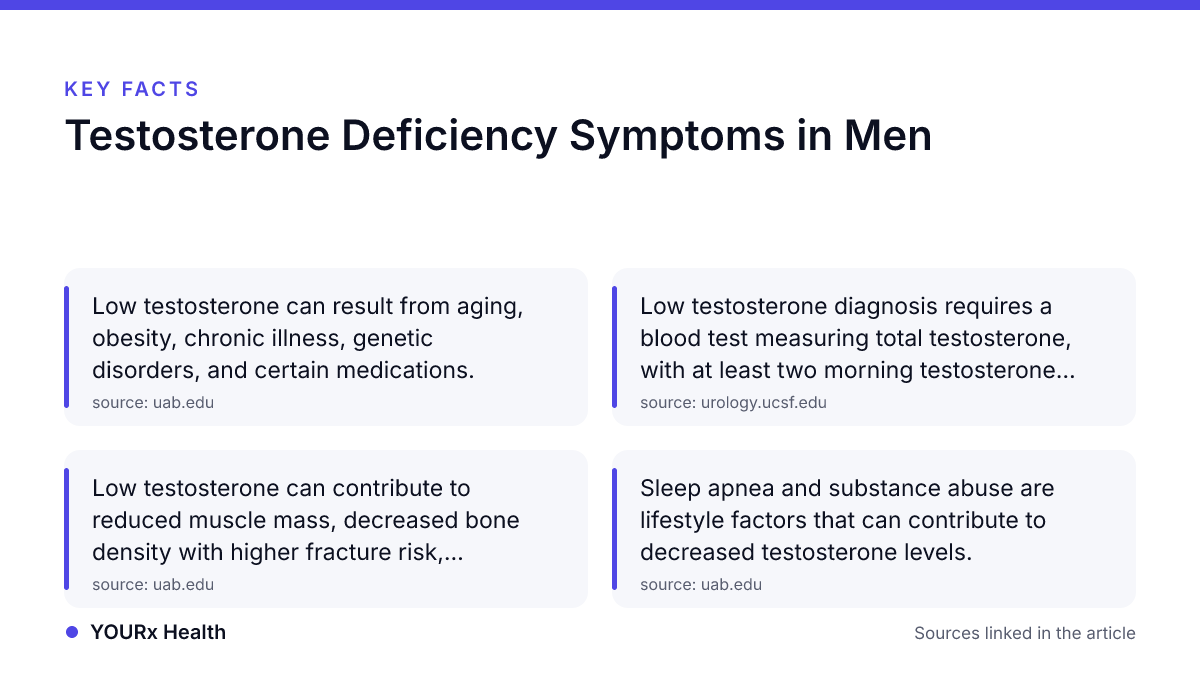
- Symptoms alone never confirm it. Diagnosis needs a blood test measuring total testosterone, and physicians want at least two separate morning readings before calling it low (UCSF Urology).
- Causes stack. Aging, obesity, chronic illness, genetic disorders, and certain medications all drive levels down, and sleep apnea plus substance use pile on (UAB Medicine).
- Ignoring it isn’t harmless. Low testosterone is linked to reduced muscle mass, decreased bone density with higher fracture risk, increased diabetes risk, and cardiovascular disease.
- Match the treatment to the cause. Weight-driven low T, sleep-apnea-driven low T, and genetic hypogonadism all need different plans, and your delivery method changes both cost and daily hassle.
The gym stopped producing results. You’re asleep by 9:30 and still foggy at 2pm. Sex crosses your mind maybe once a week, and you can’t remember the last time it was more than that.
Thank you for reading this post, don't forget to subscribe!
Most men explain this away for three or four years before anyone draws blood. Testosterone deficiency is measurable and treatable, and it hides well precisely because it arrives slowly. The symptoms that matter are low energy that sleep doesn’t fix, lost muscle and strength, reduced libido and erectile quality, flattened or short-fused mood, and shifting body composition. The only way to know whether testosterone is actually the culprit is a morning blood draw, because feeling exhausted could just as easily be your thyroid, your iron, or your sleep.
Table of Contents
- What is low testosterone in men?
- What are the early warning signs before things get serious?
- What causes low testosterone in men?
- How can I check my testosterone levels?
- Which treatment actually fits your specific cause?
- What does treatment actually cost, and how fast does it work?
- Frequently asked questions
What is low testosterone in men?
Low testosterone, clinically called hypogonadism, means the testes aren’t producing enough testosterone to support normal function: muscle maintenance, bone density, libido, red blood cell production, and mood regulation all run on it. Confirming it takes blood work, not a symptom quiz. Physicians want at least two separate morning readings of total testosterone before diagnosing, since levels peak earlier in the day and one off reading is a bad foundation for a treatment plan (UCSF Urology).
That two-test rule exists for a reason. Nearly every low T symptom has a twin somewhere else.
| Symptom you’re noticing | Classic low T pattern | What else commonly causes it |
|---|---|---|
| Fatigue | Steady, all-day, unchanged by a good night’s sleep | Sleep apnea, hypothyroidism, anemia, depression |
| Low libido | Interest quietly fades over months or years | Antidepressants, relationship stress, alcohol use |
| Lost strength | Same lifts, same food, less muscle | Undereating protein, overtraining, chronic illness |
| Mood changes | Flat motivation, shorter fuse, less competitive drive | Depression, burnout, poor sleep |
| Belly fat gain | Accumulates centrally without diet changes | Insulin resistance, reduced activity, age |
What are the early warning signs before things get serious?
Early low T shows up as “off” days, not emergencies. That’s the whole problem. A 42-year-old who skips the gym twice a week because he’s wiped out looks exactly like a 42-year-old with a busy job.
- Energy that sleep doesn’t repair. Seven or eight hours, and you’re still dragging by mid-afternoon.
- Workouts that stop paying. Same program, same protein, and the muscle just isn’t coming back the way it did at 32.
- A libido that got quiet rather than disappeared. This is usually not erectile dysfunction. It’s sex not crossing your mind at all.
- Mood that flattened out. Irritability, loss of competitive drive, a general “meh” that wasn’t there three years ago.
- Fat settling at the waist while your diet and step count haven’t changed.
Here’s the pattern we see constantly: a guy comes in convinced his problem is sleep. He’s gained 25 pounds since his second kid was born, his wife says he snores like a chainsaw, and he’s been pouring three drinks a night to unwind. That’s three separate testosterone suppressors running at once. Obesity, sleep apnea, and heavy substance use all push levels down (UAB Medicine), and he’s collected the full set.
Pro tip: two or more of these symptoms stacking for three months or longer is your threshold to get labs. One rough week isn’t a signal. A rough quarter is.
What causes low testosterone in men?
Aging, excess body weight, chronic illness, genetic conditions, and certain medications are the big five, with lifestyle factors like poor sleep and substance use layered on top (UAB Medicine). Harvard Health’s overview of why testosterone levels drop and when to consider treatment is a solid primer if you want the background reading.
Sleep apnea deserves more attention than it gets. The hormonal cycle that drives testosterone production runs during deep sleep, so a man who fragments his sleep 40 times an hour is sabotaging production every single night. Treat the apnea and some men recover meaningful ground without ever touching a prescription.
Age isn’t a prerequisite either. Men in their late teens and twenties show up with genuine deficiency from genetic conditions, testicular injury, chronic illness, or a medication they started two years ago and never connected to how they feel. That’s a different clinical picture than slow age-related decline, and it deserves a workup rather than a shrug — and if you’re unsure who should run it, our breakdown of whether you need a urologist for low testosterone explains when a specialist actually matters versus a standard telehealth workup.
How can I check my testosterone levels?
Get a blood draw in the morning, ideally before 10am, and plan on doing it twice. Testosterone swings day to day, so physicians generally want at least two separate morning readings before confirming a diagnosis rather than acting on a single number (UCSF Urology).
A few things that make the result actually usable:
- Don’t test after a night shift or a terrible night’s sleep. You’ll measure your sleep debt, not your baseline.
- Don’t test during or right after an acute illness. The flu will tank the number and tell you nothing.
- Ask for more than total testosterone. Free testosterone and SHBG explain why some men feel awful at a “normal” total. LH and FSH tell your physician whether the problem is in the testes or the brain, which changes the treatment entirely.
- Get a baseline hematocrit and PSA. You’ll want the before picture if you ever start therapy, because those are the two numbers a good clinic monitors most closely.
Through a telehealth provider this usually means a local lab draw tied to your intake, then a physician review on video. No clinic waiting room. If you’re comparing options, our guide on how to choose a legit telehealth longevity clinic covers what separates a real medical workup from a subscription that just ships pills.
Women get missed on this constantly, because low libido, fatigue, and muscle loss in women get filed under menopause or stress instead of hormones. We cover that in low testosterone symptoms doctors miss in women.
Which treatment actually fits your specific cause?
The right plan follows the cause, not the lab value. A 45-year-old carrying 60 extra pounds and a 30-year-old on a medication that suppressed his levels need completely different approaches.
- Age-related or idiopathic decline: standard testosterone replacement therapy via gel, injection, or pellet, with scheduled lab monitoring to keep levels in range.
- Obesity-driven low T: TRT paired with a structured weight loss plan, since fat tissue converts testosterone into estrogen and losing weight raises levels on its own.
- Sleep apnea or substance-driven low T: treat the sleep disorder or the drinking first. Add TRT only if levels stay low once that’s handled.
- Medication-induced low T: often improves when the offending drug is adjusted, which has to happen in coordination with whoever prescribed it.
- Genetic or chronic-illness hypogonadism: longer-term TRT with tighter lab monitoring, because lifestyle changes can’t reverse the underlying cause.
Delivery method is where daily life gets a vote. Gels are easy but transfer to partners and kids through skin contact, which rules them out for a lot of fathers of toddlers. Injections hold the steadiest levels but require a weekly needle. Pellets last months and need a minor in-office procedure most telehealth clinics can’t perform. We break down the tradeoffs in testosterone gel vs injections for busy men.
What does treatment actually cost, and how fast does it work?
Run the arithmetic before you pick a method, because the annual gap is larger than most men expect. Here’s an illustrative scenario with made-up but realistic prices. Your actual cost depends on your provider, dose, and insurance.
Say injectable testosterone cypionate runs $150 a month and a topical gel runs $200 a month through the same telehealth clinic.
- Injections: $150 × 12 = $1,800 per year
- Gel: $200 × 12 = $2,400 per year
- Difference: $600 a year, for the same therapeutic goal
Add follow-up labs at roughly $120 per panel, two panels in year one, and the injection path lands near $2,040 while the gel path lands near $2,640. Re-run it with your own quotes: monthly price × 12, plus lab cost × number of panels.
Rule of thumb we use: if the convenience of a gel is worth less than about $50 a month to you, take the injections and bank the difference. If needles are a genuine non-starter and you’d quit the protocol over them, the gel is the better value, because the cheapest therapy you abandon in month three costs you everything you spent.
| Delivery method | What we typically see on timing | Convenience tradeoff |
|---|---|---|
| Injection | Energy and libido shift first, body composition later | Weekly self-injection, steadiest levels |
| Topical gel | Similar window, more variable between men | Daily application, skin transfer risk to family |
| Pellet implant | Slowest to ramp, then steady for months | Lasts a season, requires in-office insertion |
In our practice, men notice energy and drive before they notice anything in the mirror. Strength and body composition changes follow once levels have been stable for a while, and only if training and protein intake are actually there to support them. TRT doesn’t build muscle by itself.
Pro tip: don’t judge a protocol at week two. Levels need time to stabilize, which is exactly why clinics recheck labs at six to eight weeks rather than immediately. Dose adjustments made before that point are guesses.
If low drive comes bundled with brain fog and poor stress tolerance, get cortisol looked at alongside testosterone. The two systems frequently sag together, and treating one while ignoring the other leaves men half-fixed. Our guide on low cortisol symptoms and what actually helps walks through the overlap.
Ready to stop guessing? A same-day video consult plus a morning blood panel through our treatments page gets you an actual number to work with.
Frequently asked questions
What is a dangerously low testosterone level?
There’s no single universal cutoff, because the meaningful threshold depends on your age, your symptoms, and the lab’s reference range. What matters clinically is whether your level is low enough to be driving fatigue, muscle loss, reduced bone density, or sexual dysfunction. A physician reading two morning draws next to your symptom history will tell you far more than comparing your number to a chart you found on a forum.
Can young men in their teens or 20s have low testosterone?
Yes. Genetic disorders, certain medications, chronic illness, significant weight gain, and testicular injury can lower testosterone at any age (UAB Medicine). A 24-year-old with persistent fatigue, low libido, and stalled training progress should get tested rather than assume hormones are irrelevant until 40.
What’s the difference between low T and high testosterone symptoms?
Low testosterone presents as fatigue, muscle loss, low libido, and mood flattening. Excess testosterone, usually from unsupervised supplementation, tends to produce acne, aggression and mood swings, disrupted sleep, elevated hematocrit, and testicular shrinkage as natural production shuts down. Both ends need lab confirmation and physician oversight. Neither is something to self-diagnose from a symptom list, including this one.